

Pogon Limited edition: AI Adoption readiness
A limited-edition Pogon conference focused on readiness for AI adoption.
RU4M is the operating system for professional events — a full web backoffice for setup, ticketing and check-in, a networking app your attendees actually use, and the numbers to show what it was worth.

No ticketing tool plus networking tool plus mail tool plus spreadsheet. One backoffice, one attendee list, one set of numbers.
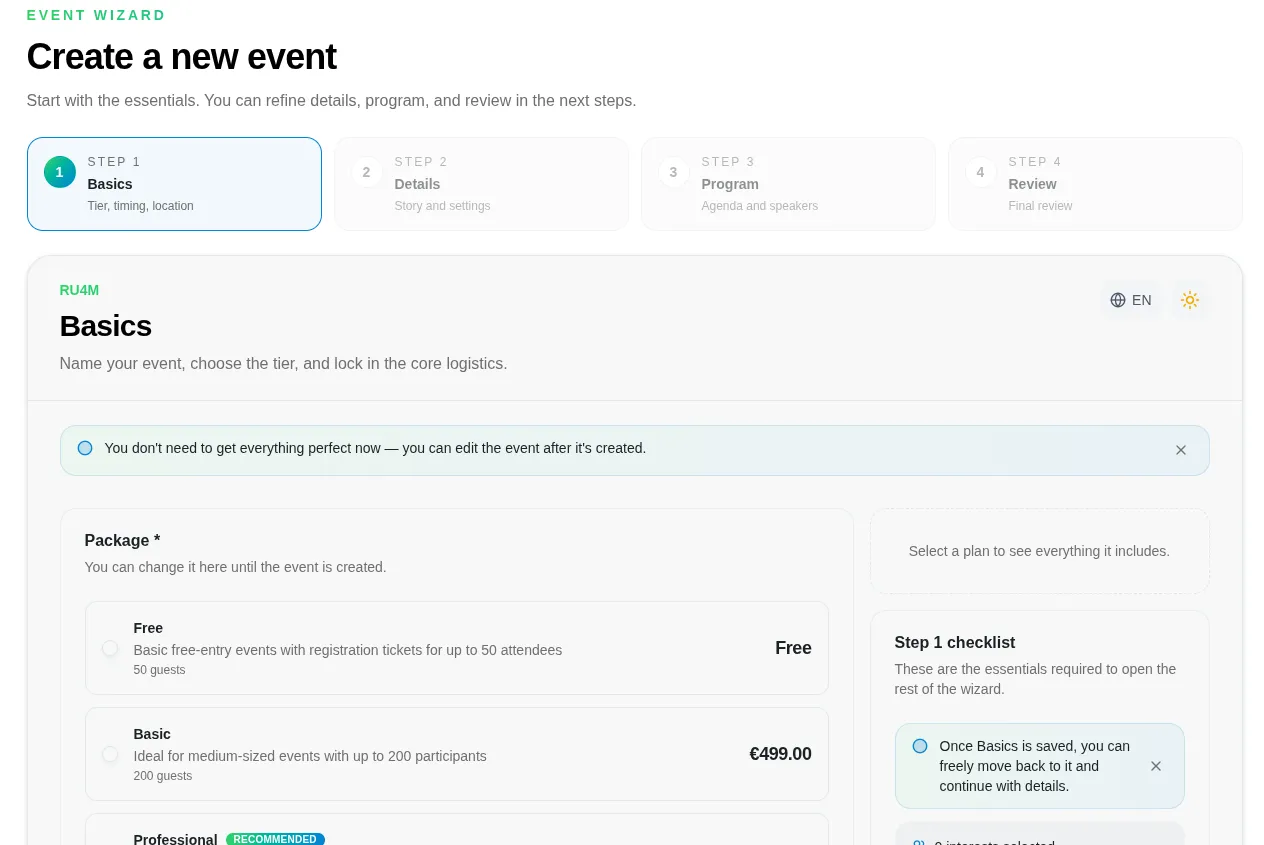
Choose the package, set the dates and location, then continue through details, program and review without leaving the event wizard.
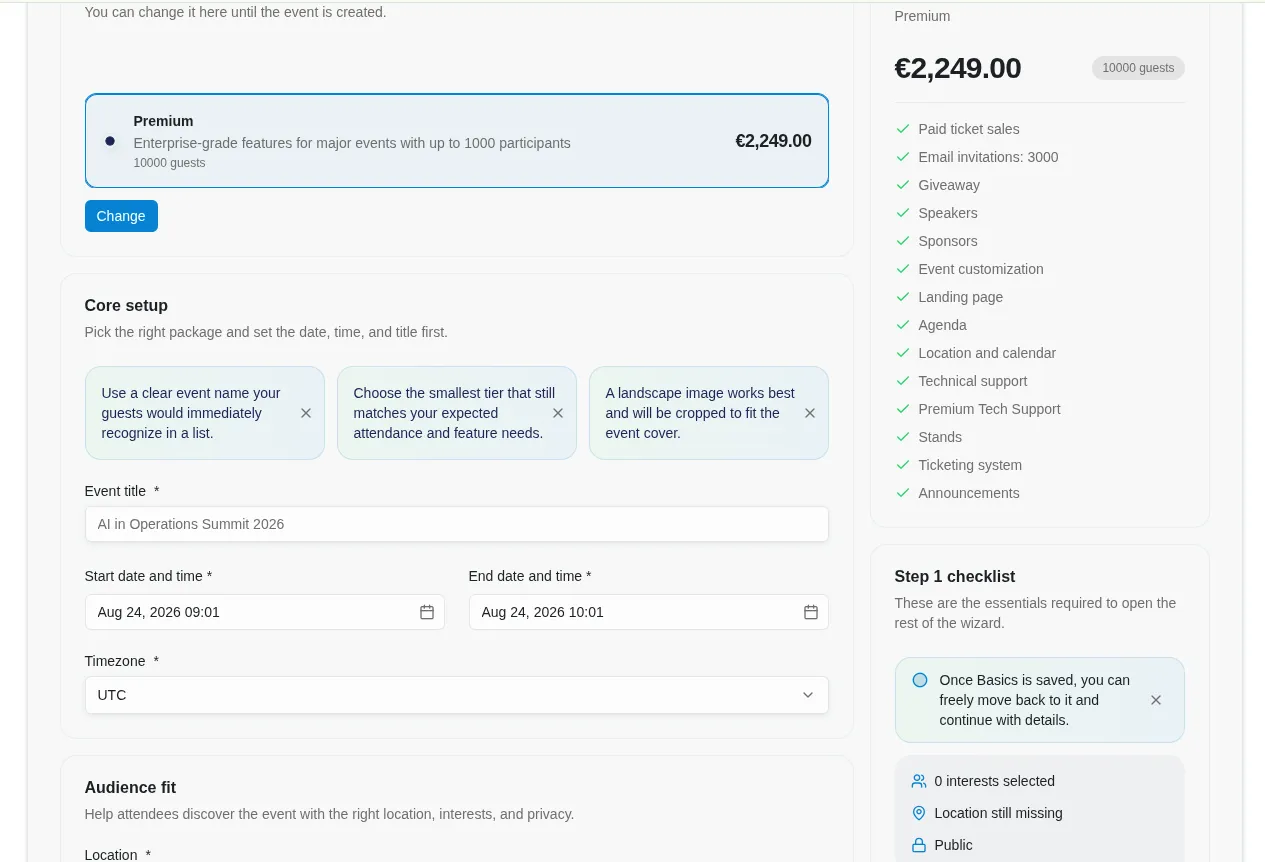
The event wizard keeps package limits, included features and the event's core setup visible together while you configure it.
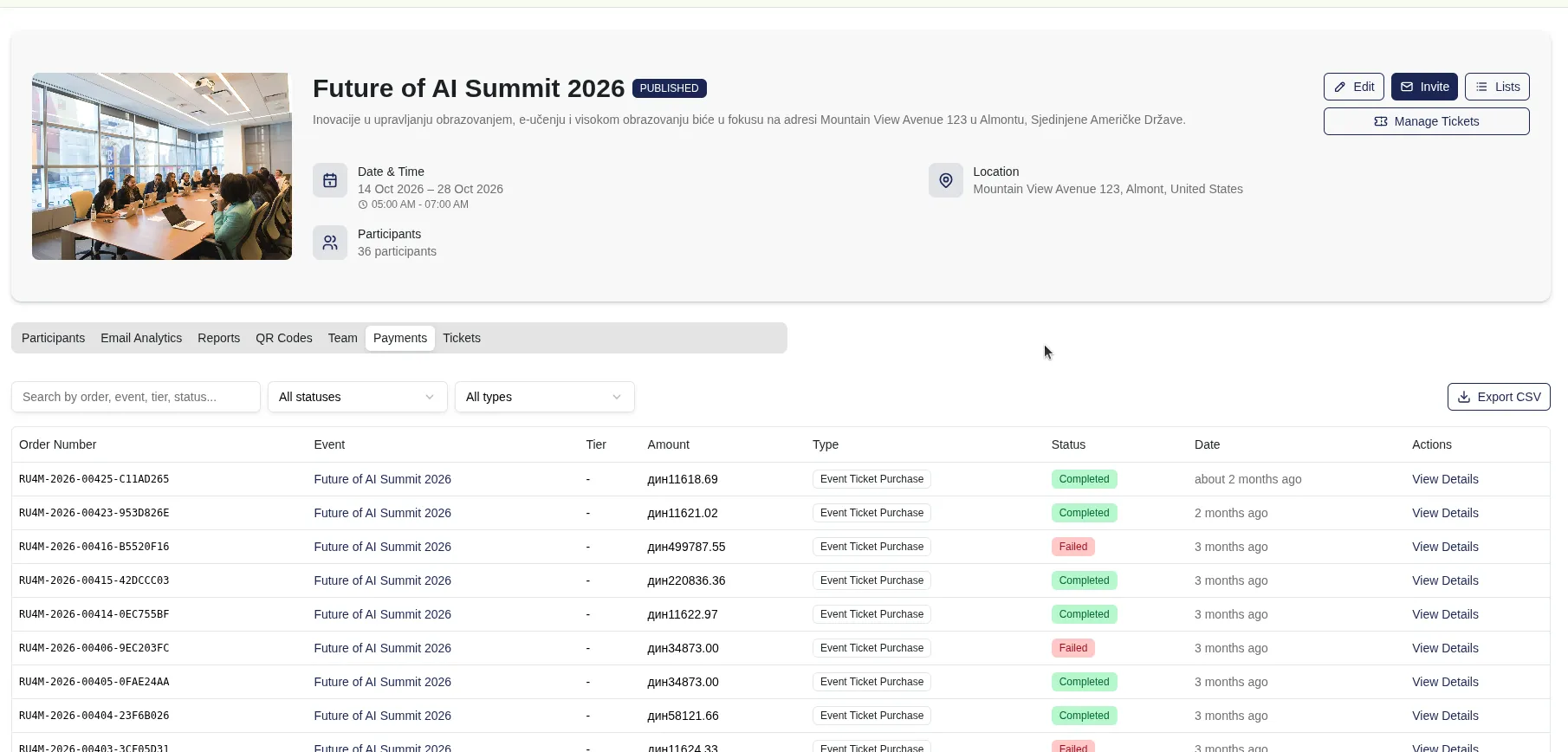
Search and filter event orders, review payment status and export the results from the event workspace.
Create the event, build the agenda, add speakers, stands and sponsors. Publish a page that looks like your brand, in seven languages.
Ticket types, capacity, promo codes and payments. Email campaigns and invites go out from the same place.
QR check-in at the door, live counters per entrance, walk-in registration, stand scans for exhibitors.
Attendance, meetings booked, engagement and stand activity — exportable the moment the doors close.
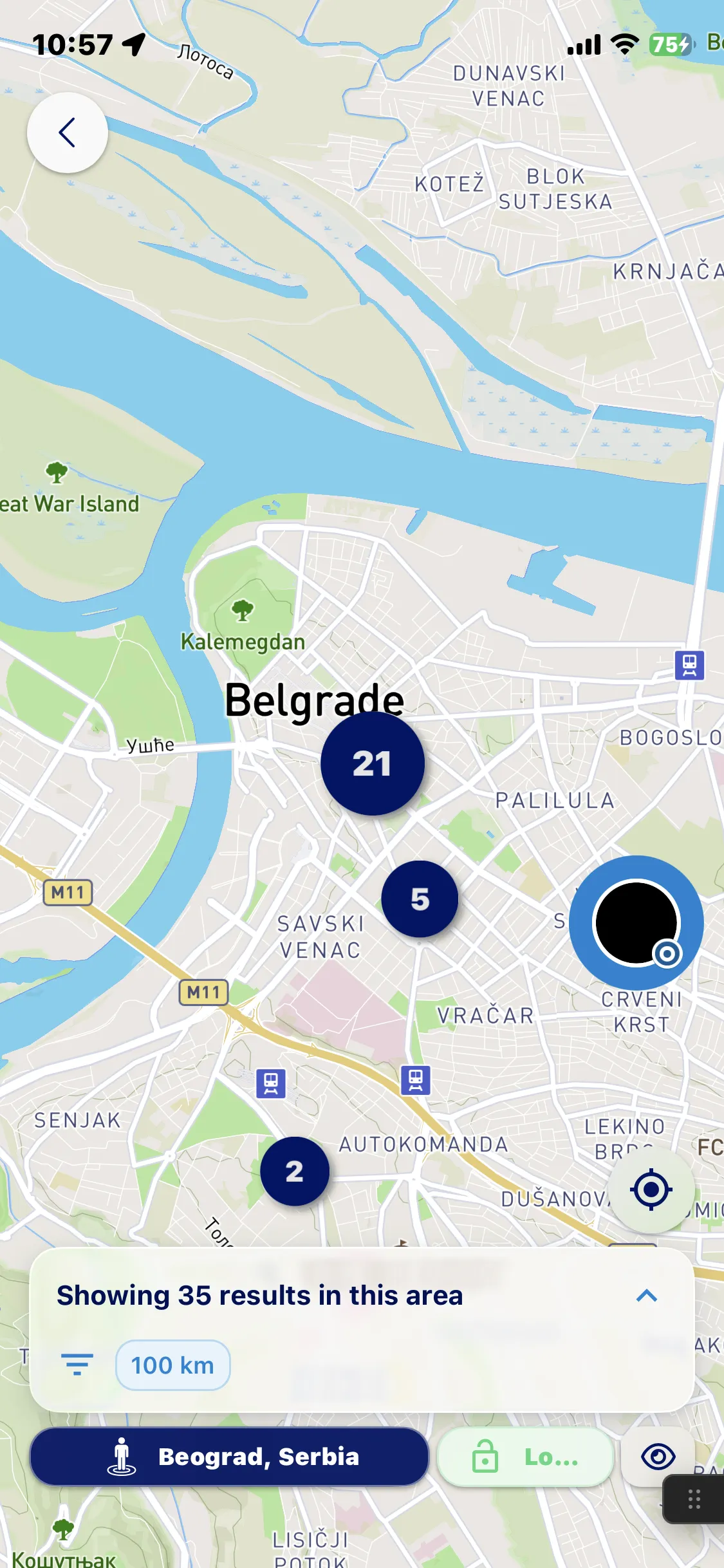
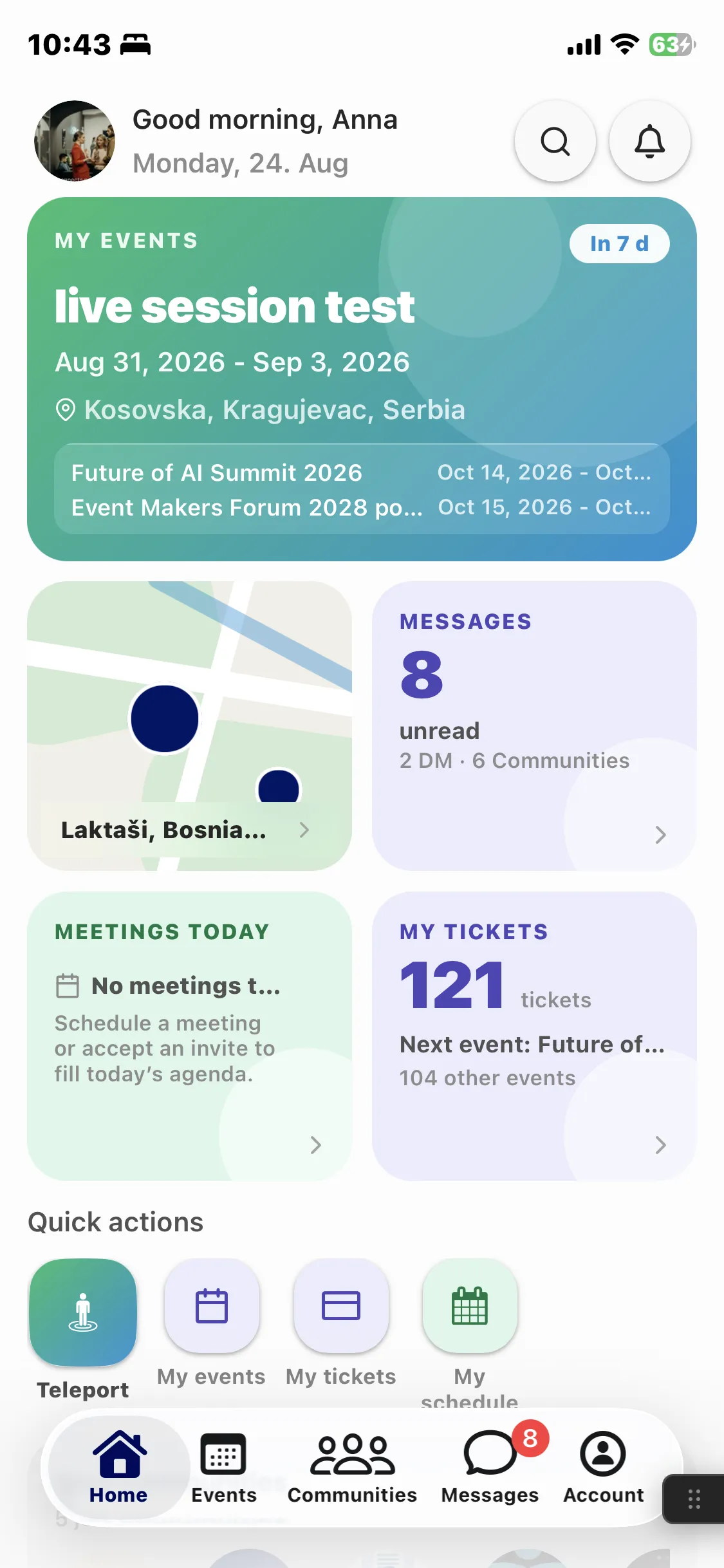
Your attendees get a live map of who is around, AI matchmaking, 1:1 meeting requests, messaging and their ticket with a QR code. They use it because it is genuinely useful — which is why your engagement numbers exist at all.
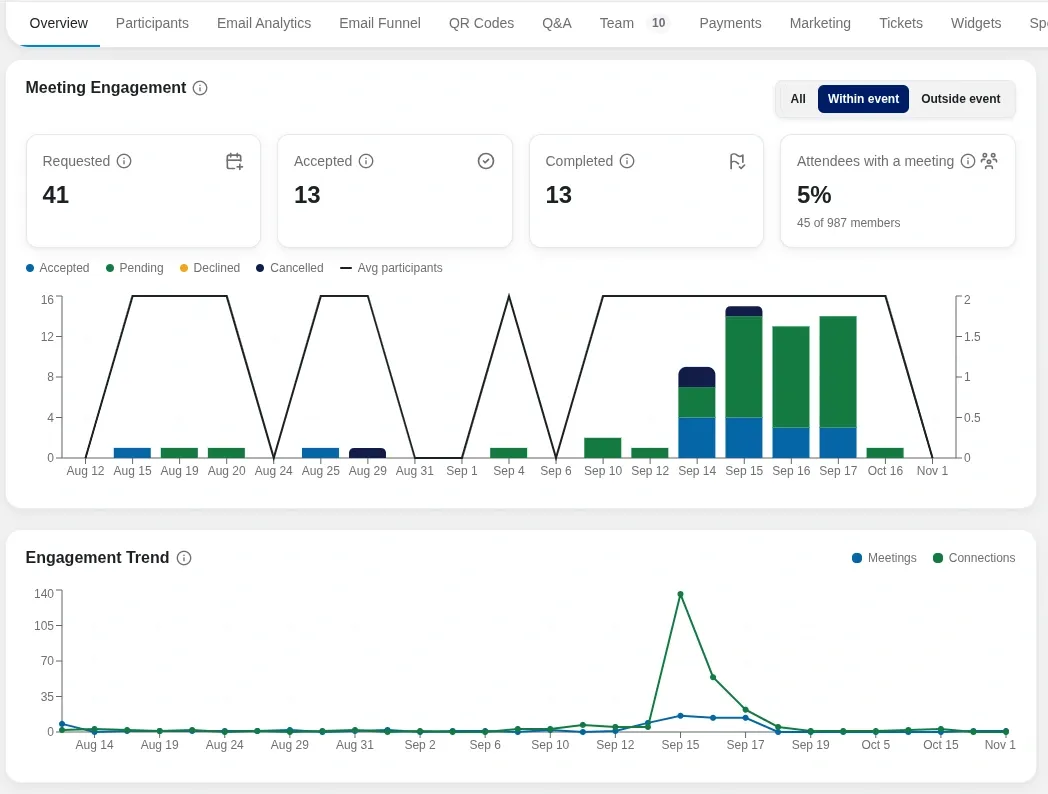
Every event produces the same questions: how many came, who were they, did they meet anyone, did the sponsors get value. RU4M answers those from the data the platform already has — no survey, no export, no manual deck.
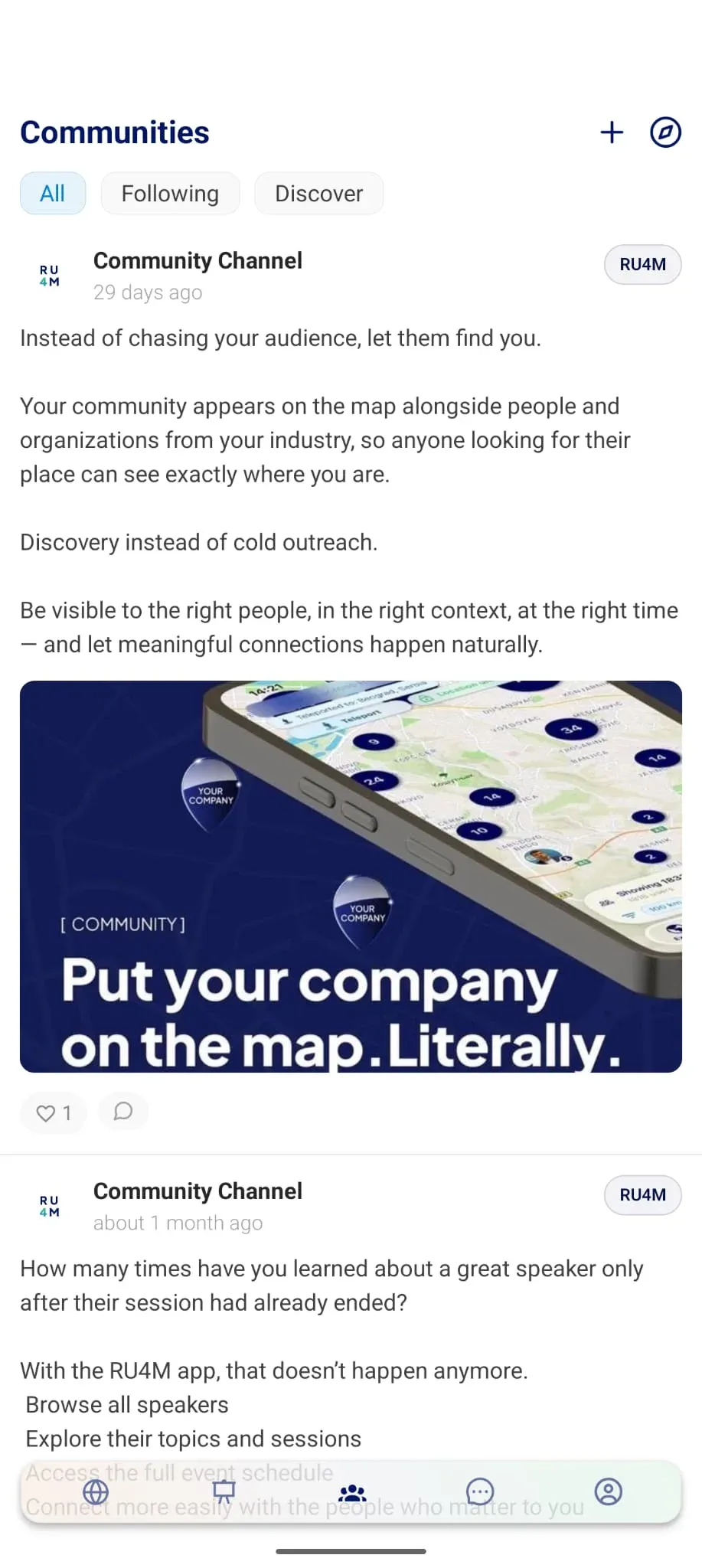
Most platforms forget your attendees the day after. RU4M keeps them in a community you own — posts, announcements, community events and RSVPs — so the next edition starts with an audience instead of a cold list.
Stands, giveaways and lead capture live inside the same event — so the sponsor report writes itself instead of becoming a favour you owe.
Each exhibitor gets a stand profile in the app, discoverable on the venue map with their own team attached.
Attendees scan at the stand. The exhibitor gets the lead, you get the traffic numbers per stand.
Run a giveaway tied to a stand or session and use it to pull attendees where the sponsor wants them.
Sponsored sessions sit in the same agenda, with the same RSVP and attendance data as everything else.
Include sponsors in the email flow with tracked links, so exposure is a number, not a claim.
Scans, session attendance and click-through per sponsor — exportable at the end of the event.
Attendee data is the most sensitive thing an event holds. Here is how RU4M treats it.
Most organizers arrive mid-season with an event already sold. Onboarding is built around that, not around a blank slate.
We build your first event with you — agenda, ticket types, branding and the check-in flow.
Import registrations and past attendees from your current tool, so nothing restarts from zero.
Support during your event, not a ticket queue.
Past events
A limited-edition Pogon conference focused on readiness for AI adoption.
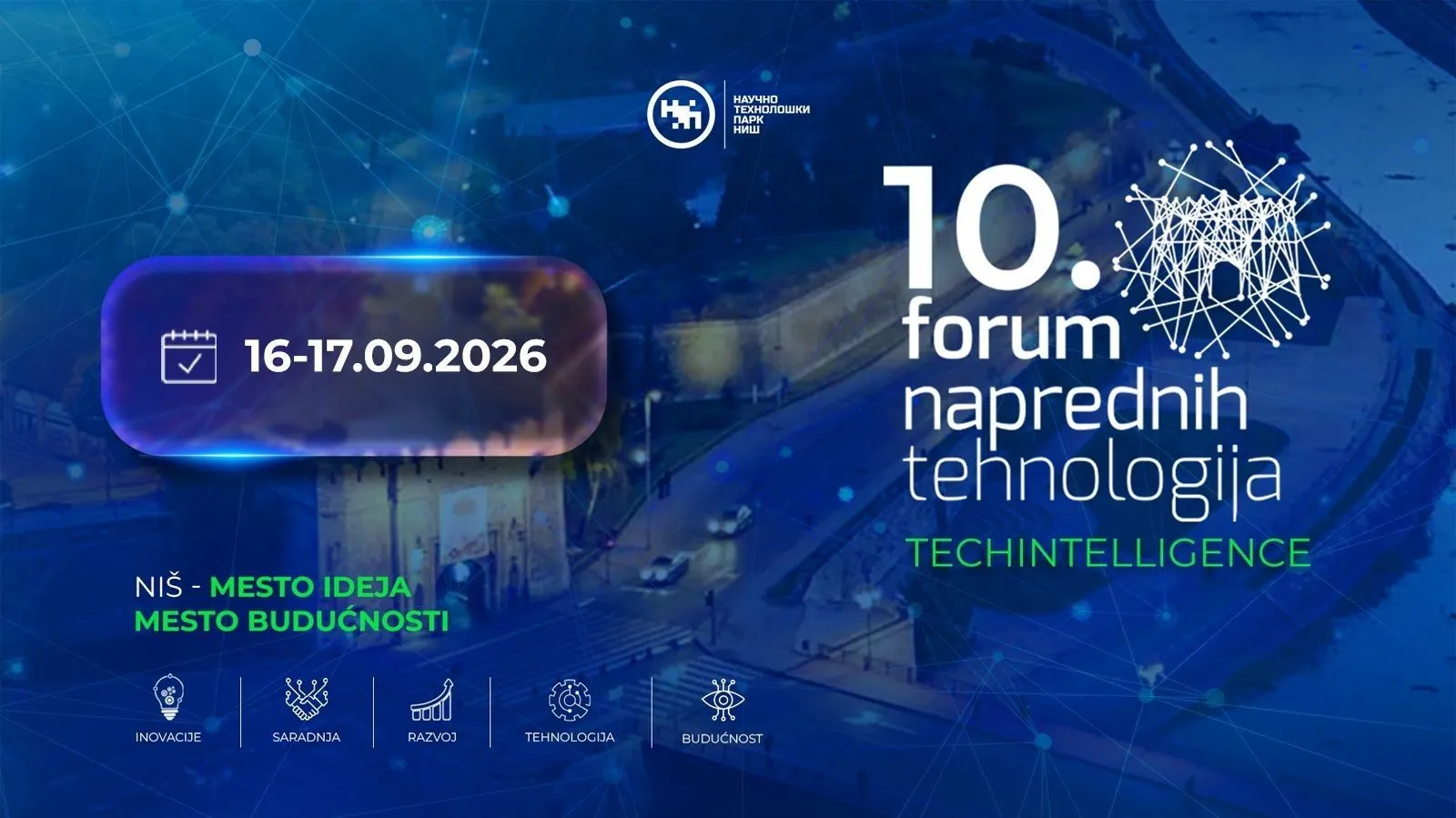
The tenth Forum of Advanced Technologies in Niš, presented under the TechIntelligence theme.
A career-focused event in Niš featuring Career Days and AIESEC branding.
Six plans, from a free tier for registration-only events up to major conferences and exhibitions. You pick the plan by expected participants — the platform is the platform.
up to 50 participants
up to 50 participants
up to 200 participants
up to 500 participants
up to 1 000 participants
up to 10 000 participants
No. The RU4M app is free for attendees on iOS and Android, permanently. You pay for the platform; whether your event ticket is free or paid is entirely your decision.
By expected participants. Plans run from a free tier for registration-only events with up to 50 participants, through Starter, Basic, Professional and Enterprise, up to Premium for major events of up to 10,000 visitors. Prices are quoted by sales rather than listed publicly.
Yes. Ticket types are per event — free entry with registration, paid tickets, tiered pricing or invite-only, in any combination.
Yes. Registrations and past attendees can be imported during onboarding so a recurring event keeps its audience.
Yes — the platform is multi-language, multi-currency and time-zone aware.
Thirty minutes, your actual agenda and ticket types, and a backoffice you can log into afterwards.